Weekly Reflection – March 9
Computational Thinking
Hello Friends! This week we learned about computational thinking. I believe that some aspects of computational thinking should be considered as general problem solving skills that can be a valuable strategy/tool for anyone. For example, the first step of decomposition is useful in almost any problem solving setting. The act of breaking down a complex issue into small, manageable problem is incredible useful for students who struggle to get started. I have experienced many students who are given an assignment and end up sitting and staring at their pages for extended periods of time. Students who struggle with anxiety, reading comprehension, or simply feel overwhelmed with long lists of stepwise instructions can greatly benefit from computational thinking.
Science labs with multiple components are a prime example of this issue. Many labs consist of multiple parts, some of which are “cooking” at the same time. Students need to figure out how to prioritize the steps, figure out logical starting points, and make sure they use their time efficiently to get the best data. Many of these labs are also done in groups. A computational approach to labs can help break the lab down into smaller, discrete chunks, and allow individuals to tackle specific parts of the lab. Once each part is completed, they can be brought together and form a whole.
Science classes often have multiple labs throughout the year. Assuming the teacher has designed the labs logically, they should all follow the same basic format and steps. This allows students to use pattern recognition and scaffold knowledge of previous labs into future success. If the labs are designed very well then students can even begin to develop simple algorithms to approach subsequent labs.
Coding
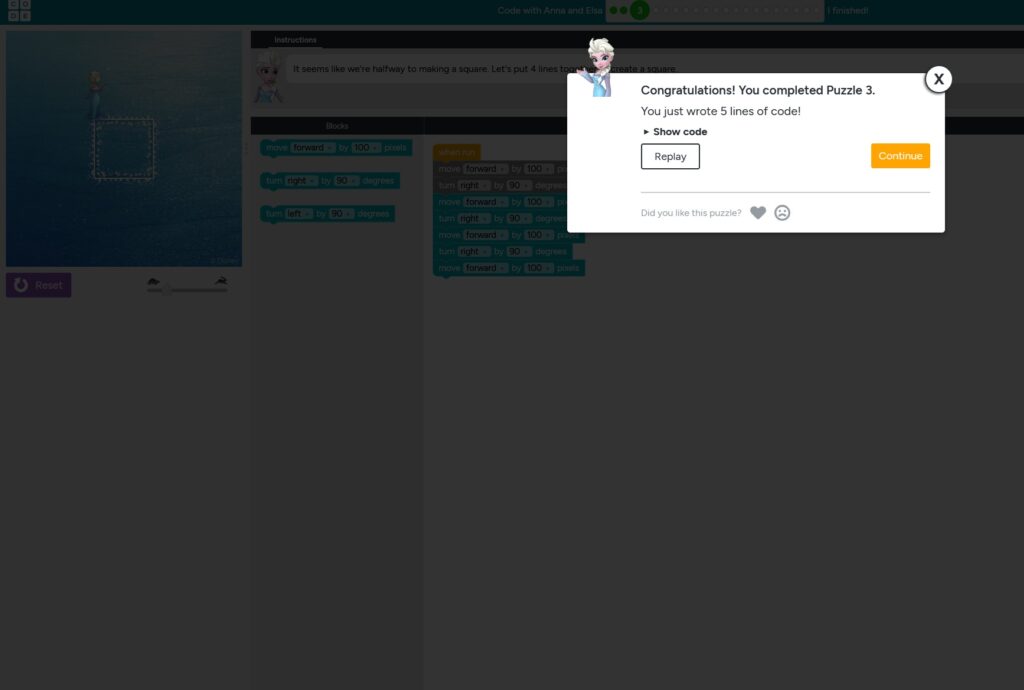
Computational thinking is the basis of coding. Studio.code.org is a website that students can use to create their own coding lines which might be useful in geometry, computer science, creative writing, or many other classroom settings. It’s a fun, interactive tool that students can use if they are feeling creative.
Gaming
I absolutely love gaming. I have played sports all of my life, I adore video games, and I love getting together with friends for some good old fashioned in person board games. I also have a bit of a competitive streak… Throughout my academic career, light competition was one of the strongest motivators for me. My friends and I would compete over grades, exams, and games in the classroom. Does this work for everyone? No. Is it the most healthy thing in the world? Absolutely not. But I do believe that incorporating some form of competition into the adolescent experience is valuable. When done in a healthy way, games can be strong learning motivators and really help to keep students engaged. I plan on using as many games as possible in my lessons but I currently do not have many in my toolbox that fit the curriculum well enough. That would have been a good inquiry project… Dang.