Weekly Reflection 4: Generative AI
Hi Friends!
Whether you agree with it or not, generative AI is here to stay. Personally, I don’t feel that anyone should panic in regards to the fear that it will lead to some sort of societal decline. The biggest issue we have to contend with currently is simply the rate at which this technology is changing. It is currently outpacing law makers, industry leaders, and the various experts we would normally lean on for guidance. There is massive unpredictability and for many people, there is nothing scarier than the unknown.
In general, it is safe to say that nearly all segments of society will need to adapt. Many skills, jobs, products etc may be lost but, once society has learned to adapt to AI, we might be better for it. Perhaps the biggest concern is “will AI take my job”? I have to admit that this has crossed my mind during these last 5 months of pre-service teacher education. I am happy to say that I don’t see that happening (not yet anyway). Rather, AI is being used more and more as a powerful supplemental tool by educators at all levels.
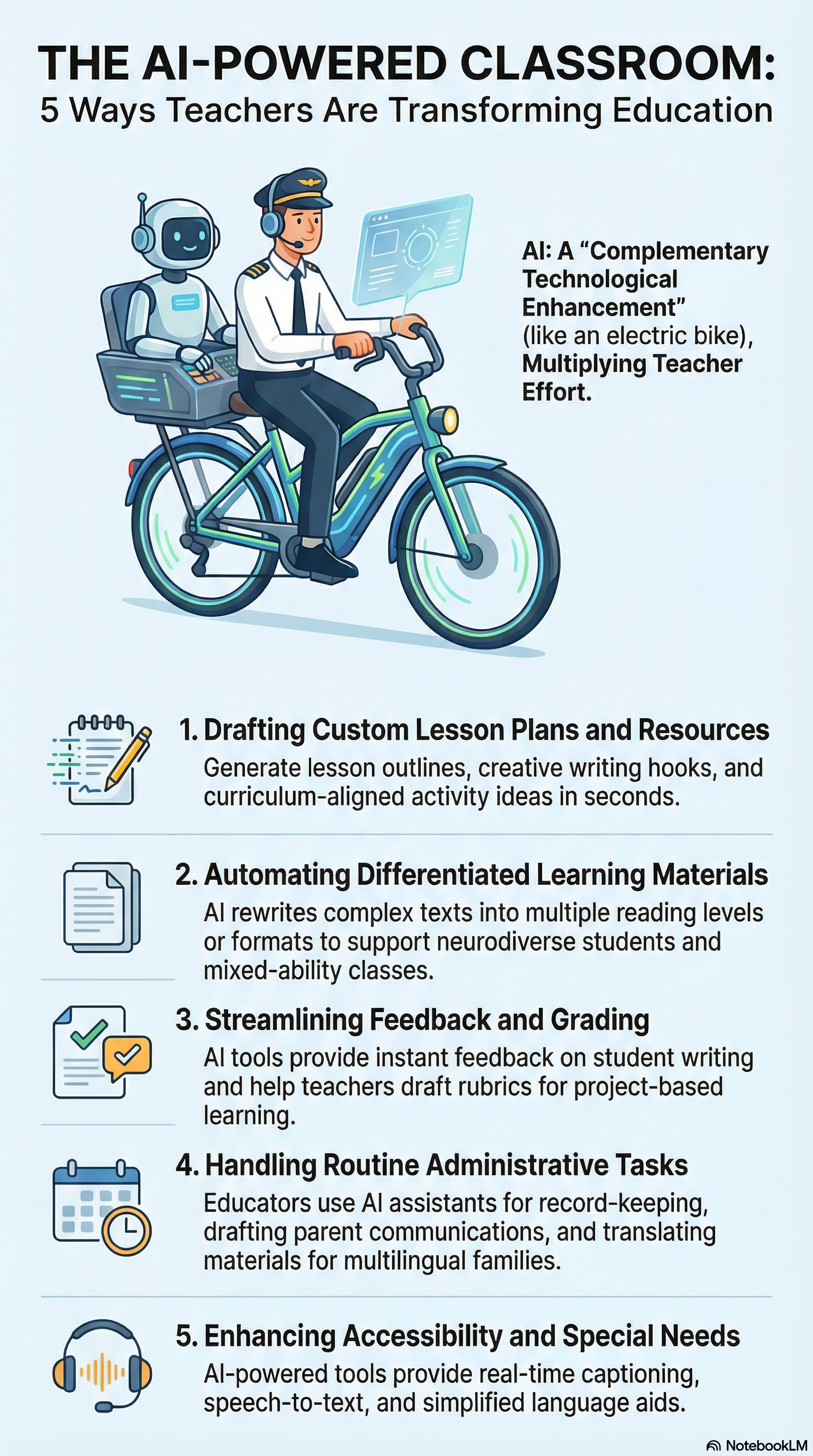
Figure 1 is an example of how powerful AI can be in education. This infographic was created on Google NotebookLM in 5 minutes. I can’t even imagine how long it would have taken me to create a poster one fifth of the quality on my own. I can see this being extremely helpful for people like myself how aren’t artistically gifted but still want to convey information visually.
Let’s explore this infographic further. One of the most common ways teachers use AI is to generate lesson plans. I tried this myself during our math course last semester. For someone with extremely limited experience creating lesson plans, ChatGPT was very powerful. It was able to spit out multiple lessons within a given unit that could be used in a pinch. The quality of each lesson was fairly basic and did require some tweaking, but they were usable. As a new teacher, I feel it would be helpful to get familiar with the lesson plans from experienced teachers before I go about creating a whole bunch on my own. Once I feel confident in what makes a great lesson plan then I don’t see any issues with using AI to help generate new plans in the future.
Another AI use becoming more common is assessment. This worries me. I do not believe that AI should be used to evaluate student work unless it is at the most superficial level. For example, I could see it being helpful to generate and grade basic multiple choice quizzes for diagnostic assessments. That’s pretty much it. I do not like the idea of having AI grade anything that requires students to think critically, creatively, or independently. To me, one of the most important aspects of teaching is the relationship between student and teacher. Using AI to mark student work has the potential to irreparably destroy this relationship and make all future interactions between student and teacher less meaningful.
Teachers must learn how to effectively and responsibly use AI in the classroom. It is here to stay and anyone who doesn’t become familiar with it will be left behind. What will we say about those people in ten years time?